Guržot ja guovssat / Spell on you! 2020, 330 x 600 x 220cm
Skábmavuođđu – Spell on Me! 2024, 350 x 600 x 300cm
Thread, steel, wood
Tate Modern Art Collection
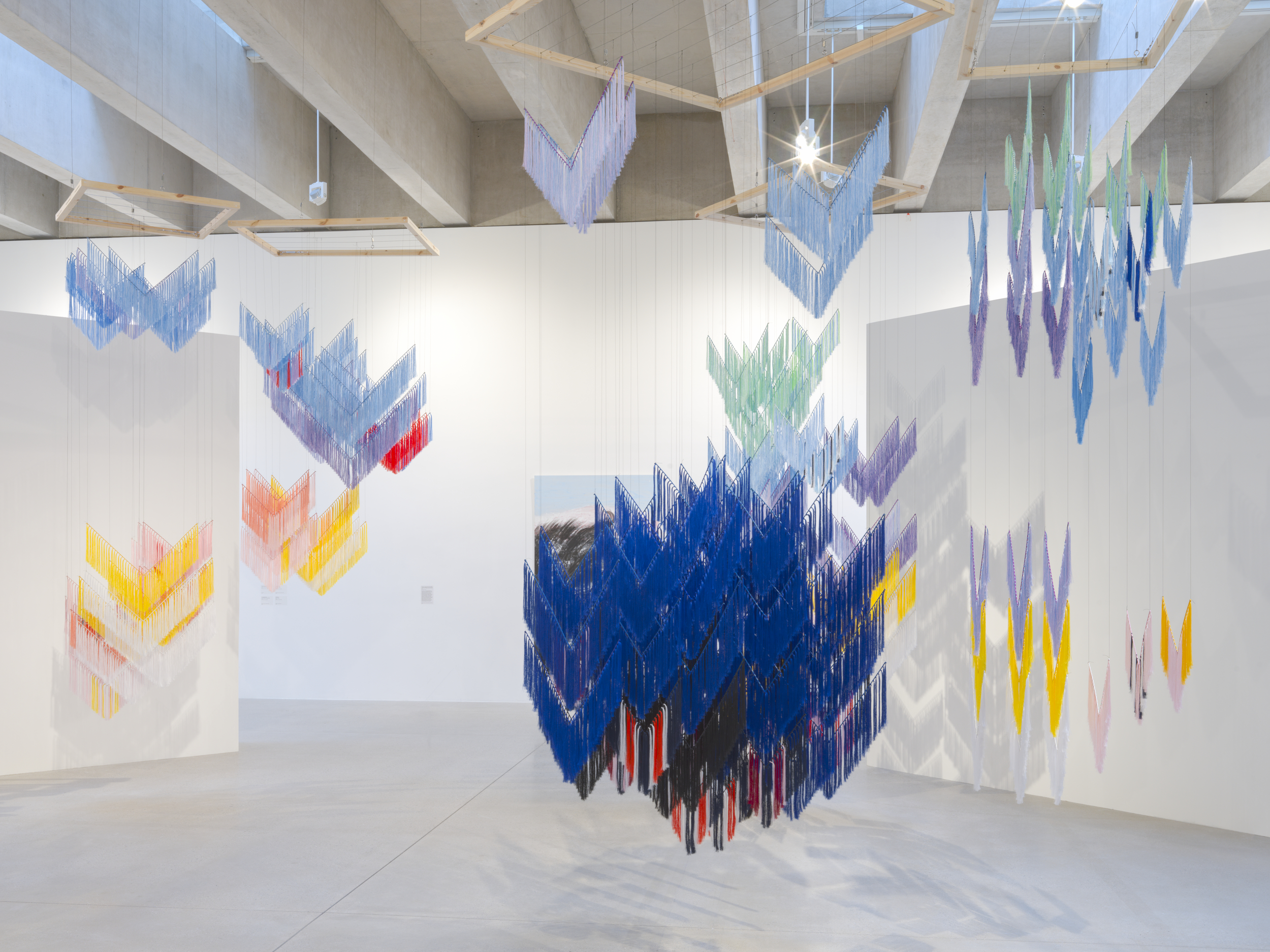
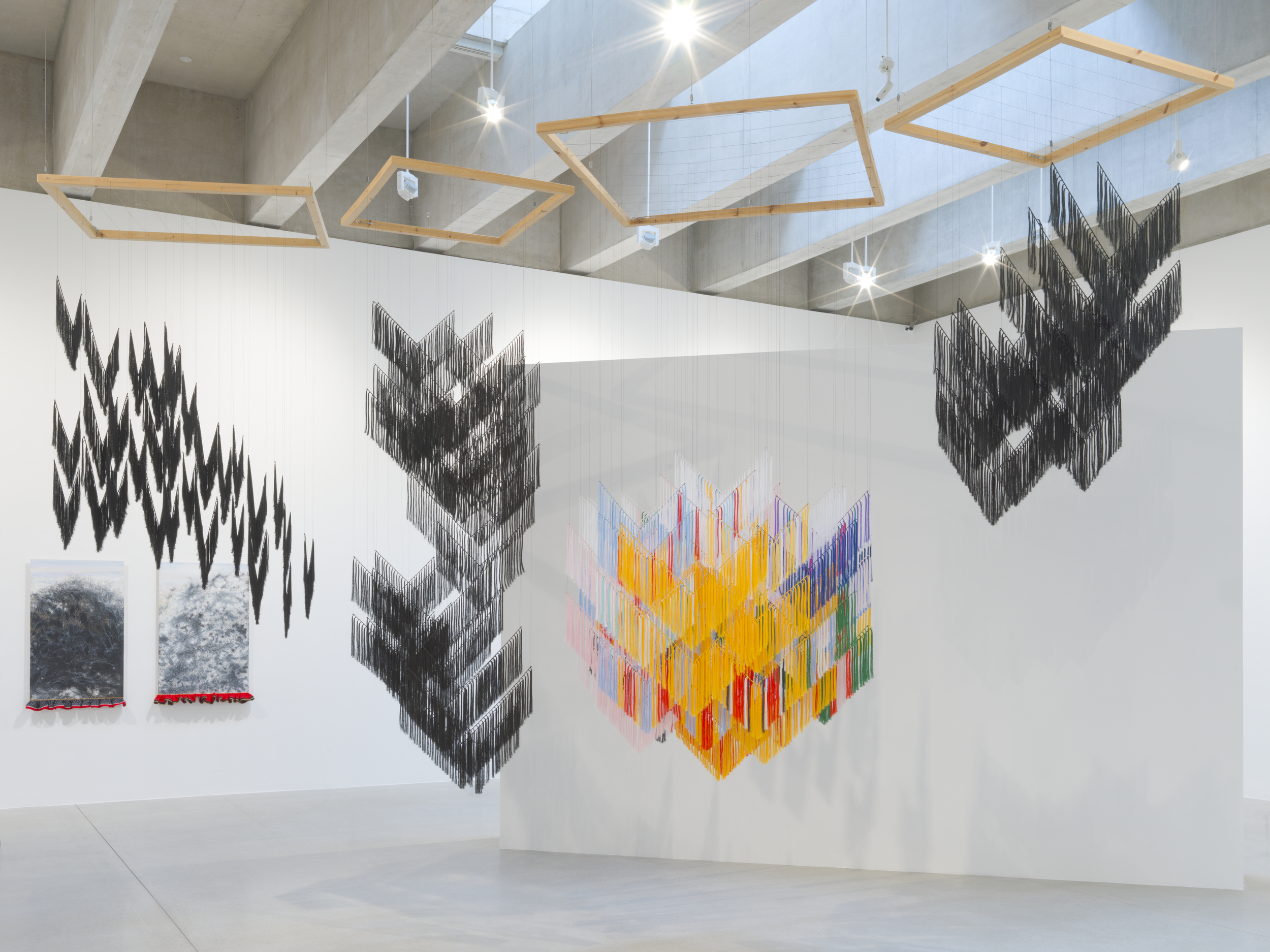
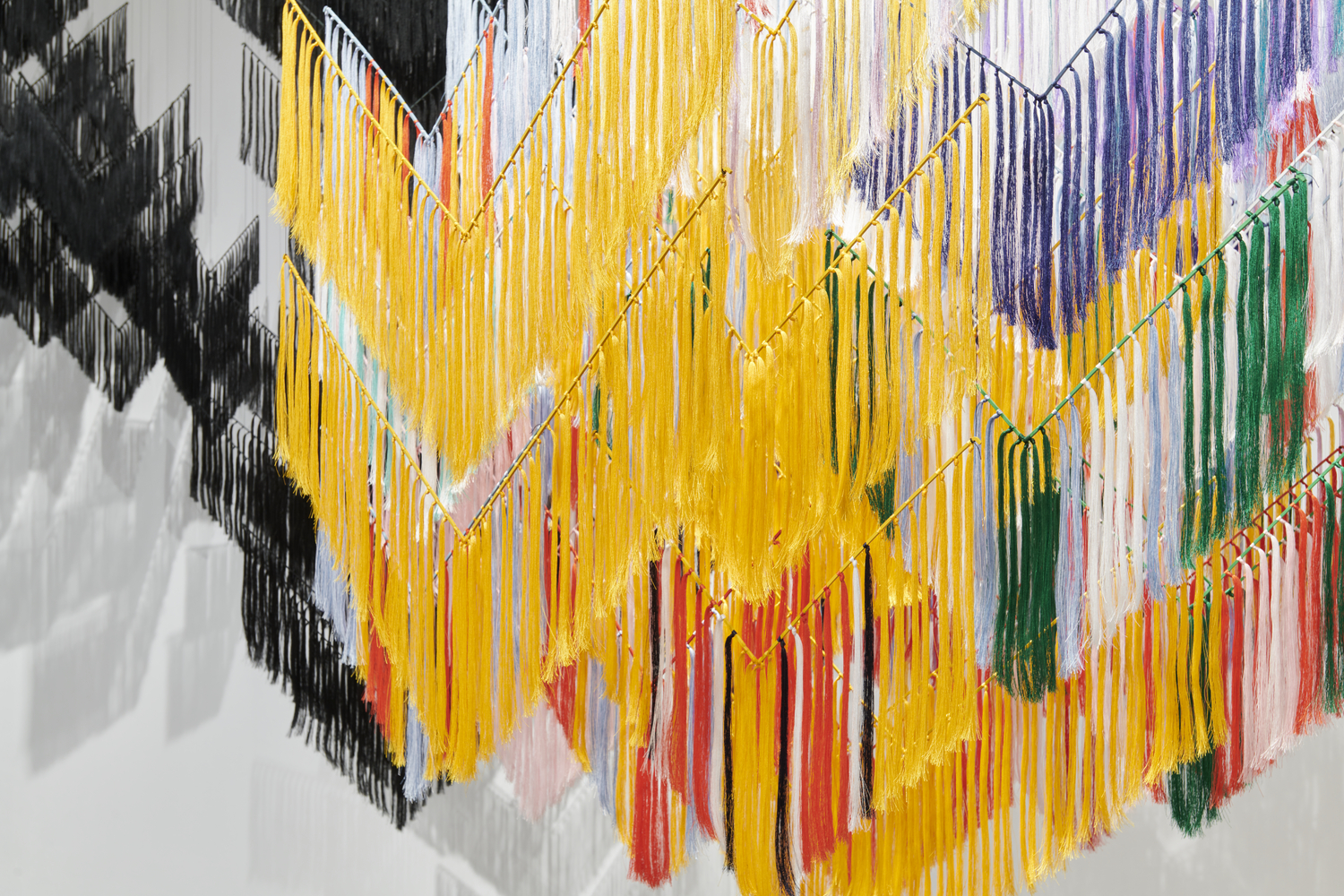
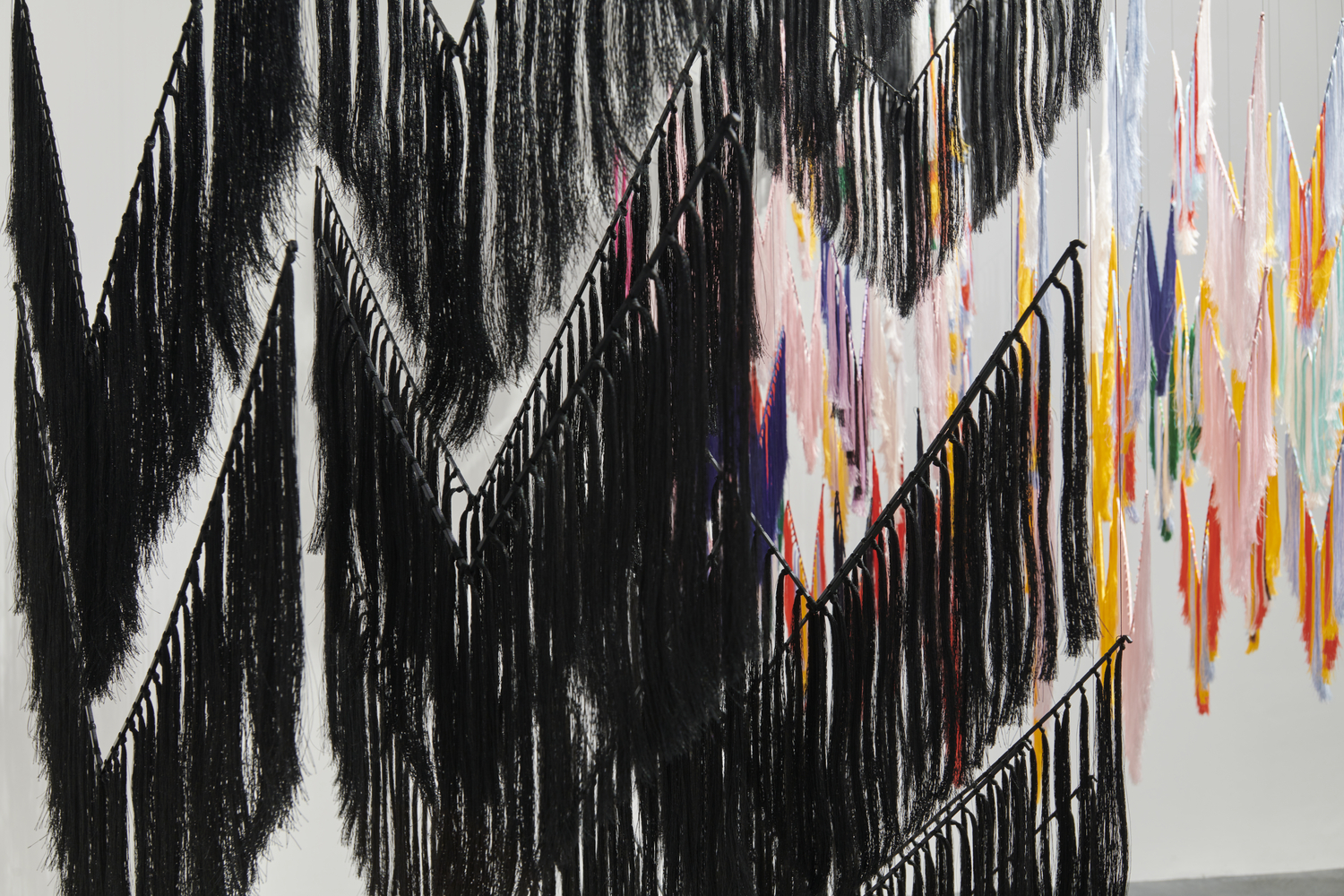
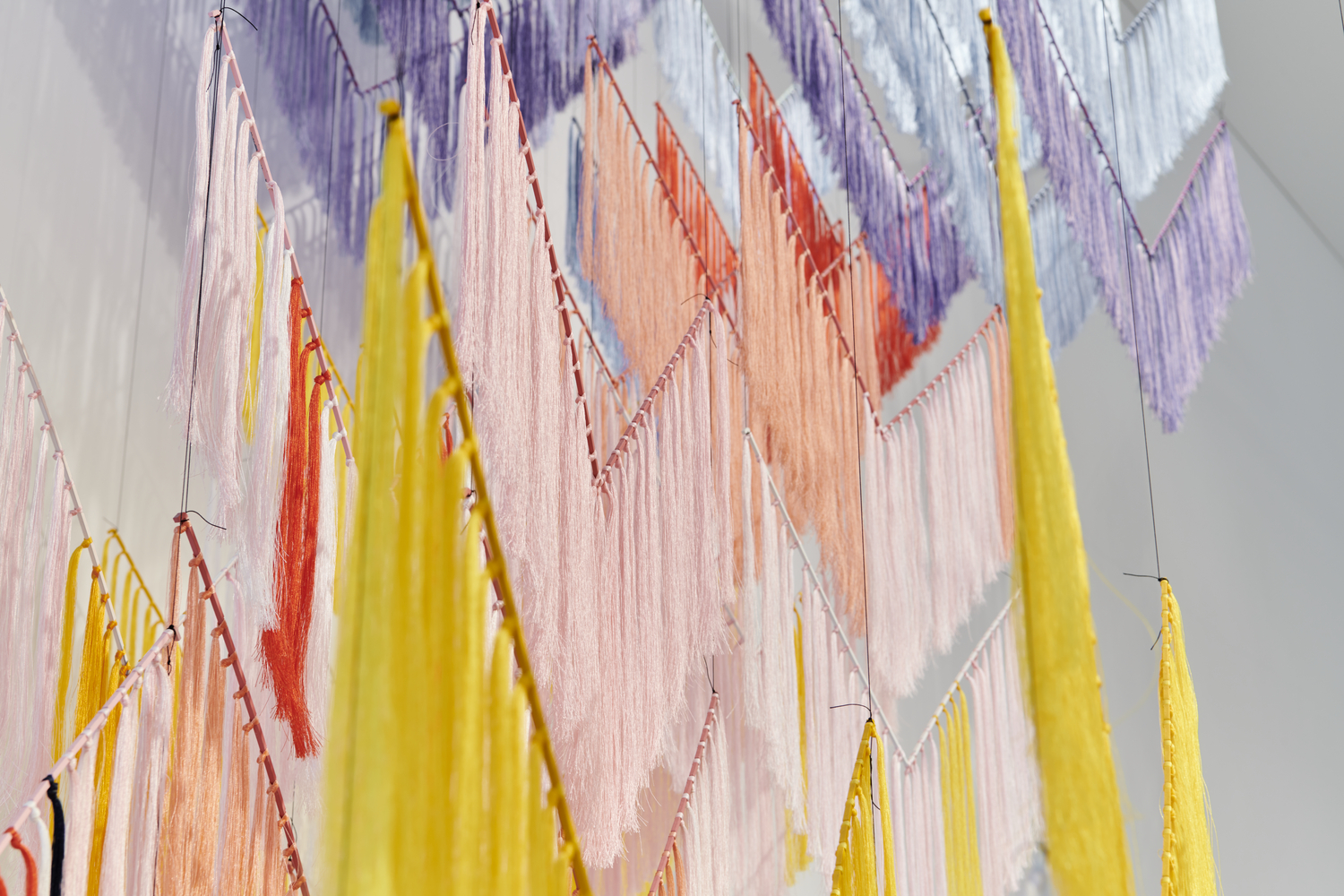
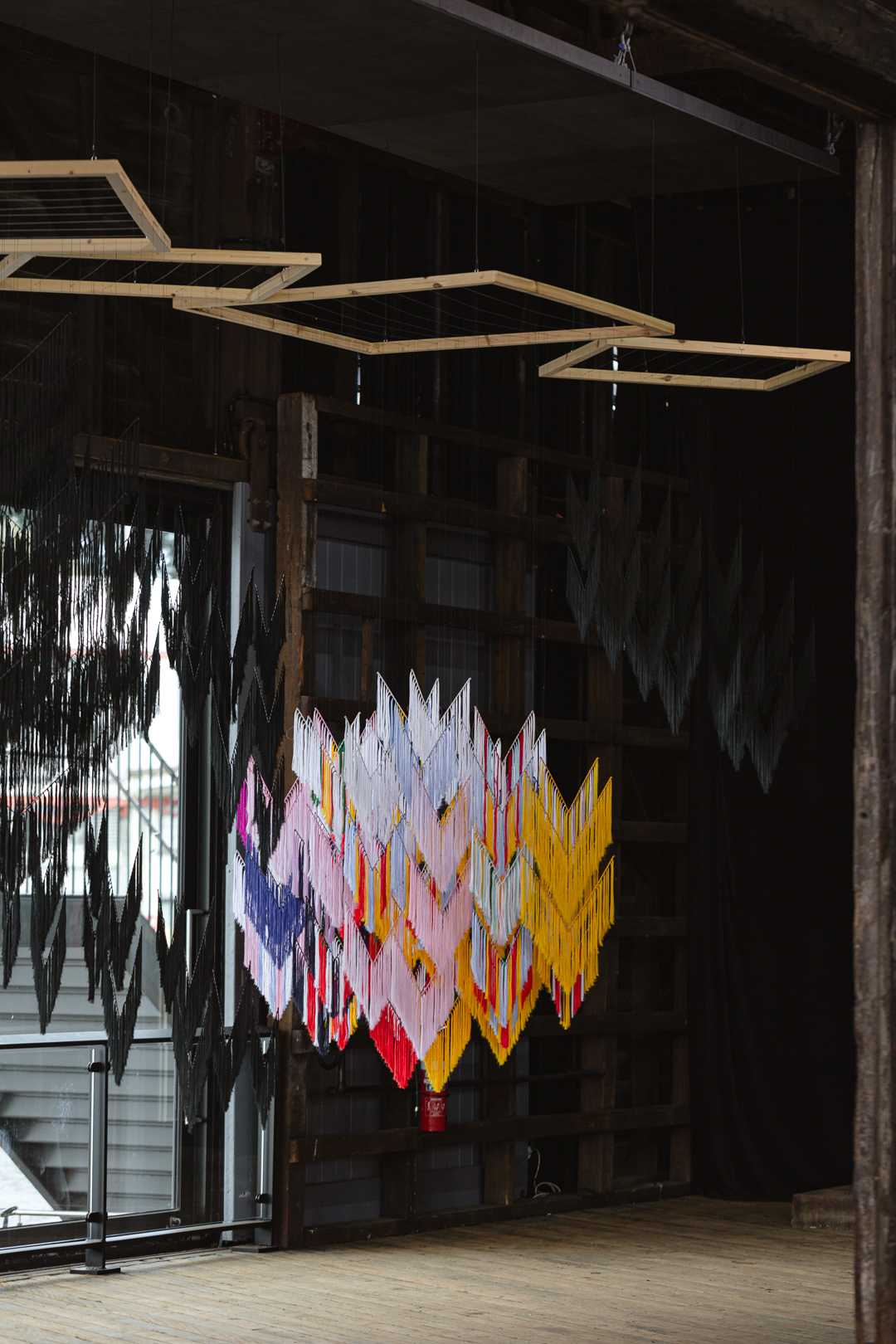
Installation view, 23rd Biennale of Sydney, rīvus, 2022, Photography: Document Photography.
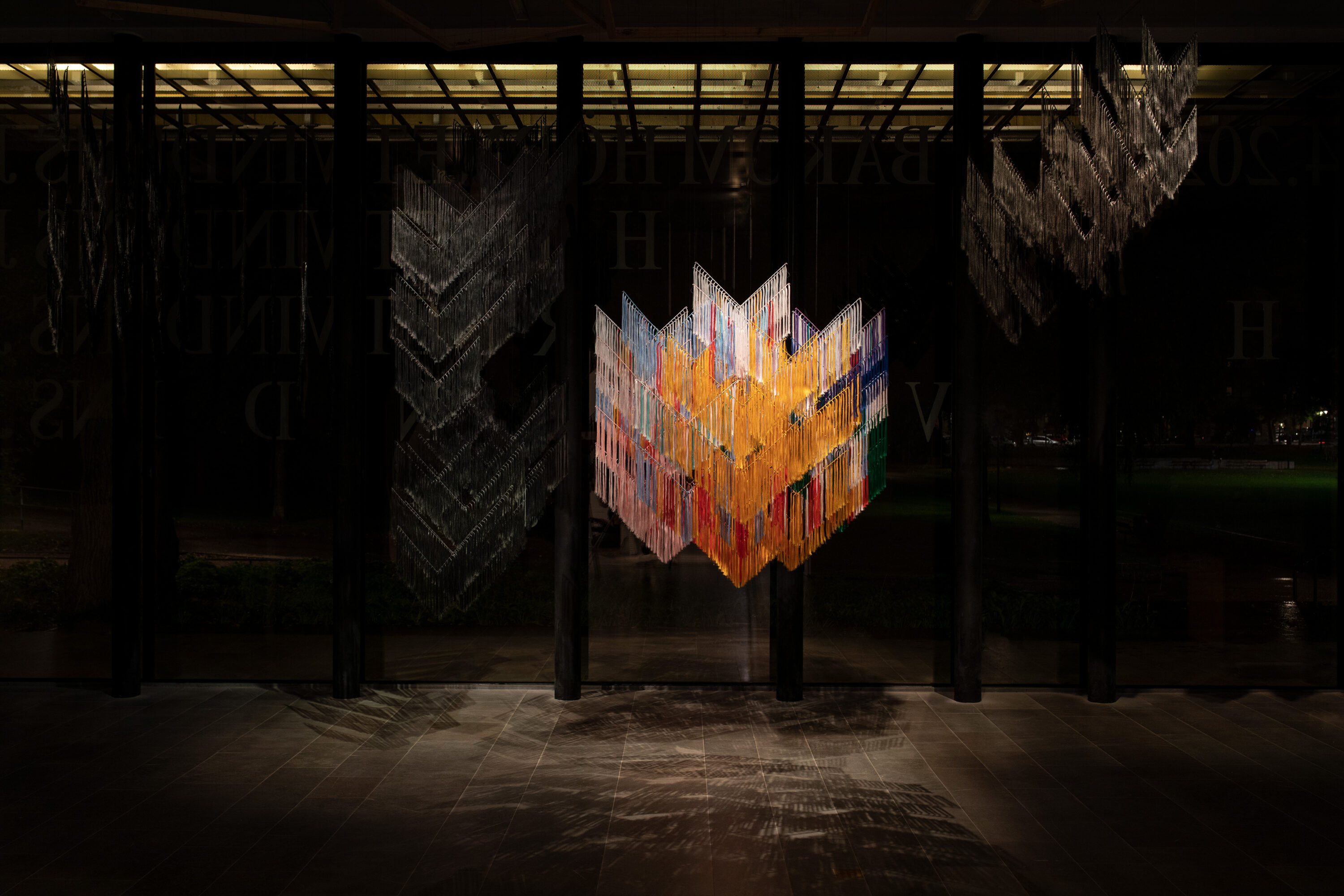
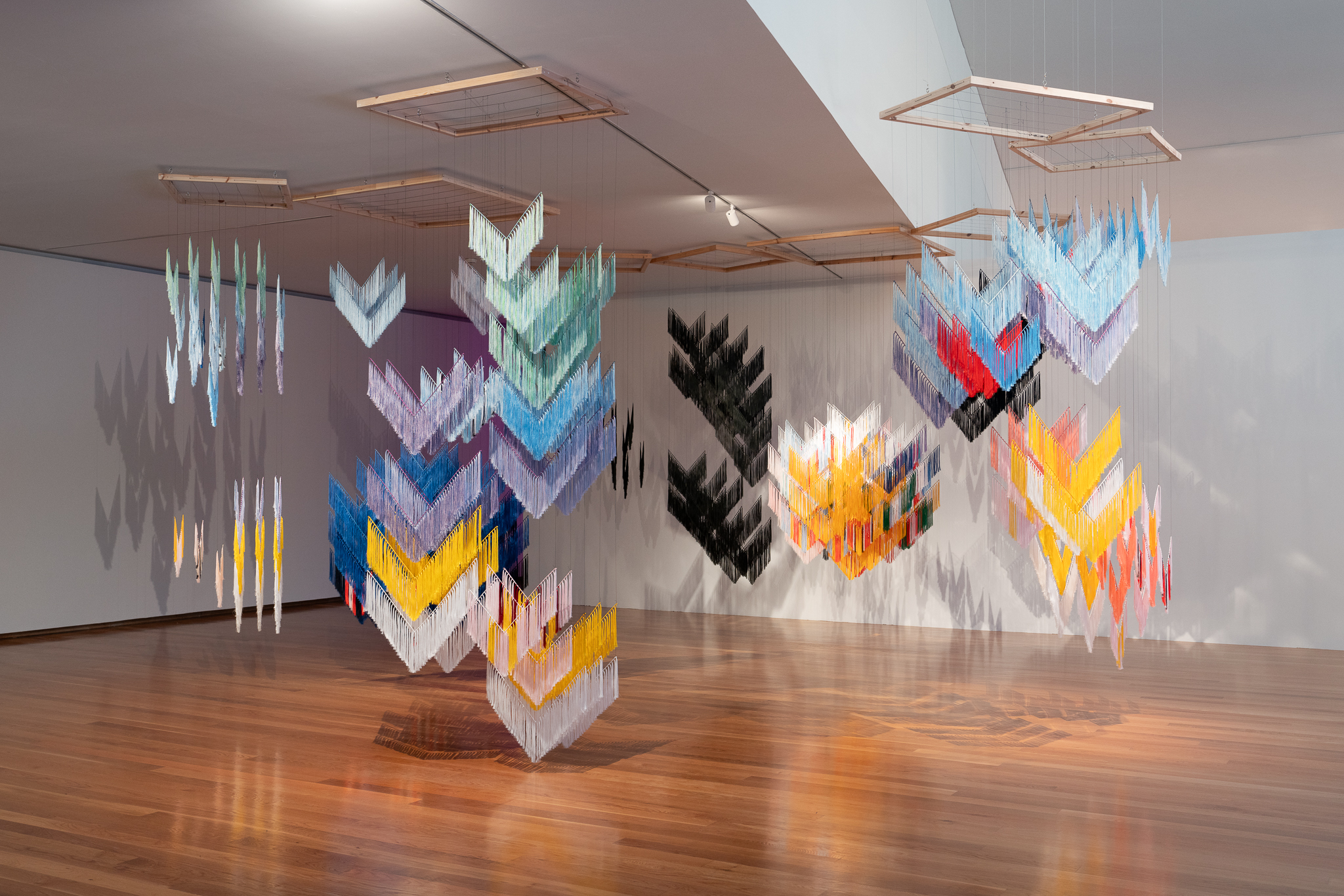
The North Sámi titles has a different meaning. Guoržžu is a bad luck bird or evil spirit, and Guovssat is a Siberian jay, a social, curious and playful bird that brings good luck. Skábmavuođđu means the bottom of the polar night era when the sun is not rising at all above the horizon.
Combining traditional duodji (Sámi handicrafts) and often working collectively, my work aims to revitalise women’s traditions and open intergenerational dialogues about revitalisation, rematriation and the biocultural reality of the Sámi people. I have a background as a painter, and I think of my installations as being like three-dimensional paintings that you can enter and experience as a protective surrounding – the kind of thing you might find in the homeland.
The installations create a spiritual forest that carries wisdom and a variety of contradictory forces; fears, wishes and desires. Many of us have a special relationship with a specific spot in our homeland. This concrete place is mirrored inside you as a spiritual place and the guardian spirits on earth become your advisors in healing and learning path.
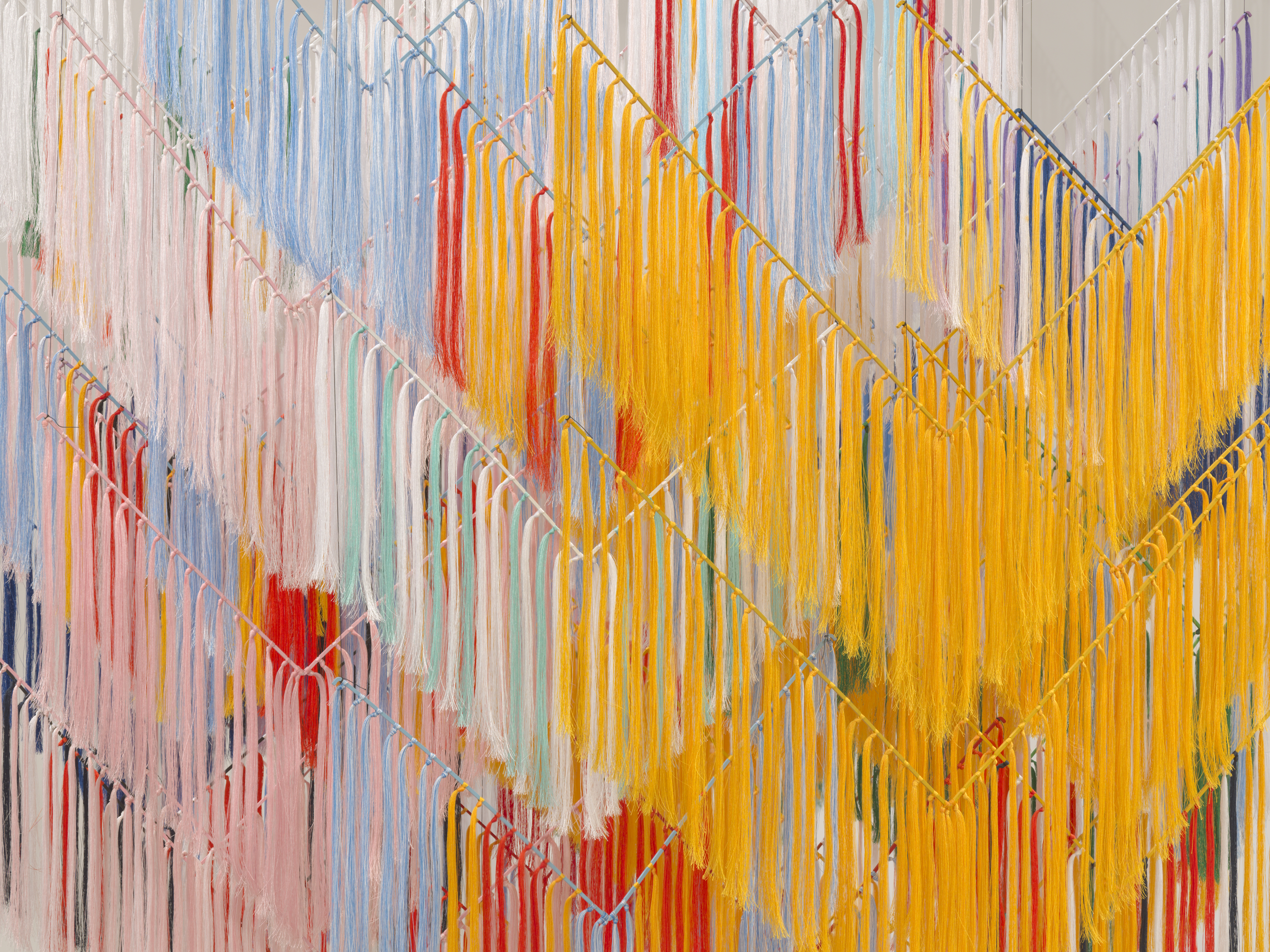
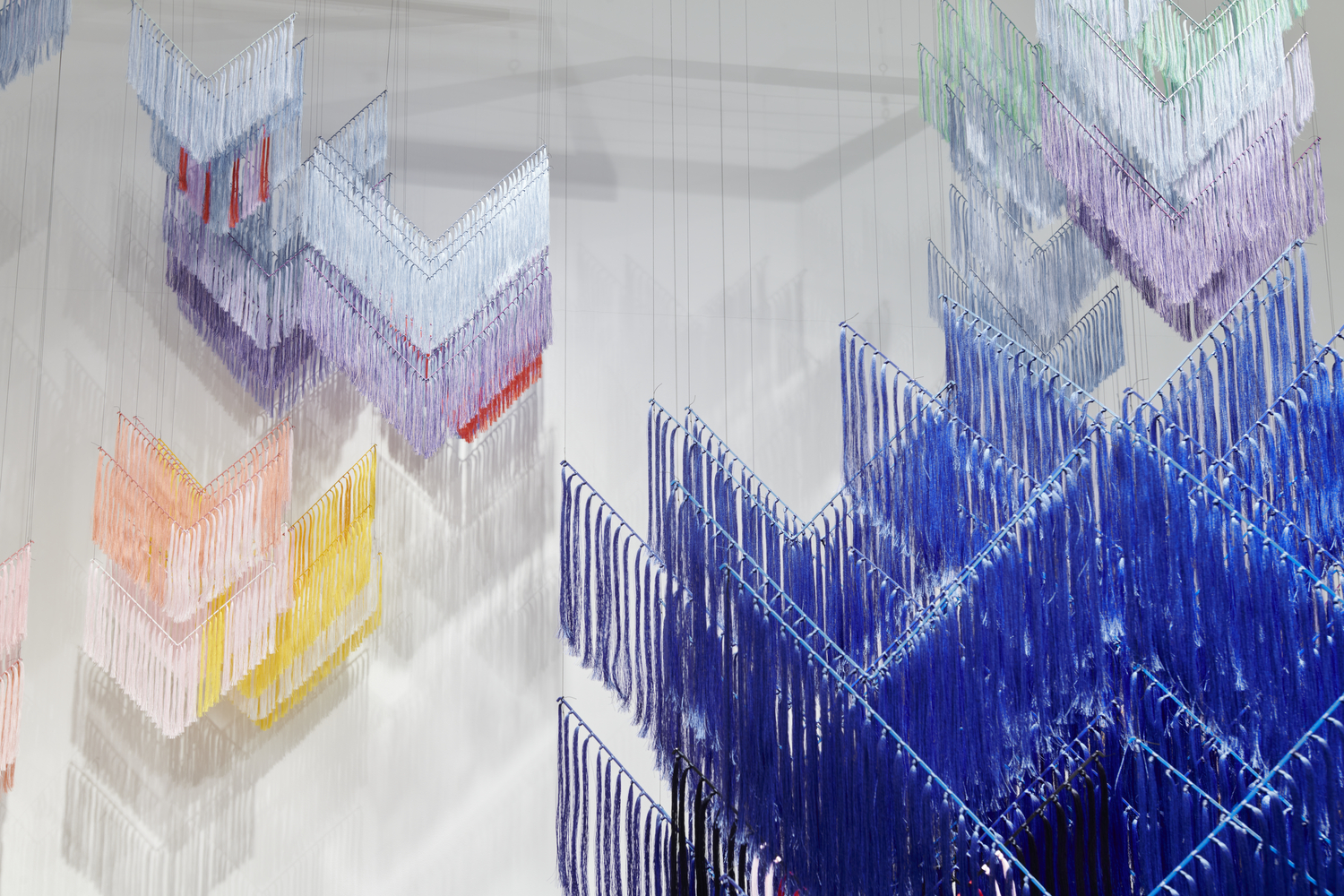
The installation parts are made with duojárs (duodji practitioners) from Sámi communities. Using traditional shawl-crafting techniques, we have revived craft, skills and self-worth. The hanging tassels reference modes of social gathering, kinship and collective creativity. The installations with laborious hand-woven knots are a matriarchal counterforce to a competitive, individual–centred society.
Duodji can be translated as art, handicraft or home-craft. Duodji objects combine utility and beauty, creating objects of art that have practical use. Duodji is a holistic concept that preserves the Sámi philosophy, values and spirituality and connects them with practical and traditional skills. Duodji is doing and making, crafting and creating. Duodji have been invalidated and demonised. Despite this, it is still today very powerful and vital. For me, duodji deals with vulnerability, sincerity, sensibility and communality. There is a somatic aspect in duodji. Duodji brings out things that we hold in our bodies, like intergenerational traumas, but with this also comes the wisdom of our ancestors. Often when you are learning or doing duodji your hands show you how to do it. Your hands remember, even though you weren’t aware you knew how. We hold collective knowledge in ourselves.
I also love the ritual aspect of duodji-making. In my installations, I use a lot of Sámi shawl tassels. It’s a simple act to make the tassels and knots – the process is very repetitive and natural, and it produces a feeling similar to the one you get when walking or skiing. It’s like a practical way of synchronising with the rhythm of other living entities. And while you are doing a specific duodji, you know that there are other people who have made, and are making, the same things, which makes it a collective form of memory and creativity.